In this article, I am going to tell you what you should consider before you chose which broker to use to day trade currencies on the FOREX market.
Your broker affects the prices you receive, the cost of each transaction and how reliably you can manage positions. These details matter particularly in day trading, where relatively small price movements can determine whether a trade finishes ahead or behind. Before comparing brokers, decide which currency pairs you intend to trade, your usual trading hours and the amount of money you can afford to put at risk.
Read reviews
You should always read reviews before you decide which broker you should open an account with. We review a small number of the top forex brokers. If you do not find the forex broker you are looking for among our reviews then I recommend that you visit daytrading.com and read their review of the broker.
A useful review should explain how a broker performs in practice rather than simply repeat its advertising. Look for discussion of trading costs, order execution, withdrawals, platform features and customer support. Check the publication date and whether the reviewer identifies the legal entity being assessed. A broker operating under one brand may serve customers through several companies, with different account conditions and protections.
Customer feedback can help identify recurring problems, but individual comments need context. A complaint about a withdrawal deserves investigation, while a complaint about losing a trade does not automatically establish misconduct. Look for patterns across independent sources and pay attention to how the broker responds. Reviews may contain affiliate relationships, so use them to build a shortlist and verify important details against the broker’s current documents.
Financial instruments offered
What type of financial instruments does the broker offer? Does the broker provide FOREX futures, spot options, binary options, CFD.s, and other financial instruments? What assets are the instruments based on? Can you find the type of instruments you want to trade based on the assets you want?
These products are not interchangeable. Currency futures have standardised contract specifications and expiry dates, while CFDs provide contractual exposure to price movements without ownership of the currencies. Conventional options involve premiums, expiry dates and other pricing considerations. The term “spot options” needs clarification: spot forex and currency options are different products. Availability also depends on your location; the FCA prohibits the sale, marketing and distribution of binary options to retail consumers by firms operating in or from the UK.
Your goal should be to find a broker that allows you to trade with all the financial instruments you want to trade with. This is sometimes not possible ( or practically) and in this case, you might have to register and keep money with several brokers to be able to make all trades you want to make.
Chose the instruments you want to trade with first and then the broker. Never the other way around. You are more likely to succeed if you trade financial instruments that you are interested in and for which you have a genuine interest. This makes it easier to stay motivated to study these financial instruments closely enough to make money.
Interest can support consistent study, but it does not establish a profitable strategy. Check minimum trade sizes, contract values and trading hours for your chosen products. A broker offering hundreds of markets may still be unsuitable if its smallest position is too large for your account.
Mobile Trading

Do the broker offer a good solution for mobile trading. Is it available for both Android and iOS? What about Windows mobile? Most brokers make it easy to trade on your mobile device but it remains important to make sure that the broker you want to trade with offer a good mobile platform before you register. Make sure that all the features you want to use regularly are available in the mobile version of the site.
The Windows Mobile reference above is historical: Microsoft ended support for Windows 10 Mobile in December 2019. Focus on compatibility with a currently supported device and operating system. Test whether the application lets you adjust stop orders, close part of a position and inspect available margin. Being able to view a chart does not necessarily mean that every desktop trading function is available.
Consider how you would manage an open trade if your usual connection failed. A mobile application can provide an alternative connection, although it will not solve an outage affecting the broker itself. Check whether orders remain active after you disconnect and whether trailing stops require a running platform. Enable available account security features and keep your device updated.
Leverage
What leverage does the broker offer? Do they offer high leverage or only lower leverage? Do they margin close losing positions automatically to limit your loses? Automatically closing losing position can be a good or bad thing depending on your trading style.
Please note that most brokers offer different leverage for different financial instruments. Your goal should be to find a broker that offer the leverage you want for the type of asset you want to trade.
Higher leverage increases the exposure available for a given margin deposit; it does not improve a strategy’s accuracy. A $10,000 currency position gains or loses approximately $100 on a 1% movement in its quoted value, before costs and conversion effects. That exposure remains $10,000 whether the broker requires $500 or $1,000 as margin. Judge risk using position size and account equity, rather than the deposit required to open the trade.
Margin close-out is not simply an optional trading preference. Under UK retail CFD rules, maximum leverage is generally 30:1 for major currency pairs and 20:1 for other currency pairs. Firms must close positions when account equity falls below the applicable 50% margin threshold, as market conditions allow. Negative balance protection limits liability to funds in the relevant CFD account, not the margin on an individual trade. Neither protection guarantees that a planned stop price will be achieved.
Regulations and Security
Is the broker regulated by a respected and trusted regulatory body? Never register and trade with any broker that is unregulated or regulated in a small unknown jurisdiction. Chose a broker that is controlled by a well-respected regulator such as the FSA.
Updated regulatory context: The UK Financial Services Authority mentioned above was replaced in April 2013 by the Financial Conduct Authority and the Prudential Regulation Authority. The FCA is the relevant conduct regulator when checking a UK forex broker. The existing FSA link is a historical reference, not the current place to verify authorisation. Assess a jurisdiction through its actual regulatory standards and legal protections rather than its size or familiarity.
Find the legal company name in the account agreement and check it independently against the relevant regulator’s register. Confirm its permissions and compare its contact details with the website you are using. Fraudsters can copy a genuine firm’s name and registration number. Also establish which rules cover client money, complaints and broker failure. Regulation reduces certain risks, but it does not prevent ordinary trading losses or guarantee that every product offered by a firm has the same protection.
Banking
What banking options do the broker offer?. Do they make it easy to deposit, and perhaps more importantly, withdraw money. Make sure that the broker offer banking options that are suitable for you.
Read withdrawal conditions before making your first deposit. Check minimum amounts, processing times, charges and any requirement to return funds through the original payment method. Distinguish between the time the broker takes to approve a withdrawal and the additional time needed by a bank or payment provider. Complete identity verification early so that missing documents are less likely to delay access to your money.
Account currency also affects costs. Depositing in one currency and trading through an account denominated in another may create conversion charges on deposits, withdrawals or trading results. A modest initial deposit and withdrawal can help you understand the process, although one successful withdrawal does not establish long-term reliability. Requests to send extra money to a private account to “unlock” a withdrawal should be treated as a serious warning sign.
Accounts & fees
Do the broker offer a single type of account or do they offer several different types of accounts that you can choose among? Does any of these accounts suit you?
What fees do the broker charge for clients using the type of account you are considering opening? It there another type of account that you could get that would be cheaper for you to use. Estimate how much you are going to trade and chose a type of account that suits you and your needs. How much you trade will often affect which account is the cheapest for you to use.
Compare the total cost of opening and closing a representative trade. One account may charge through a wider spread, while another combines a tighter spread with commission. Suppose your position has a pip value of $1. A 1.2-pip spread costs approximately $1.20. A 0.2-pip spread plus $0.70 commission for opening and closing costs approximately $0.90. This illustration assumes unchanged prices, no slippage and no other charges.
Advertised minimum spreads are less useful than the spreads available during your normal trading hours. Record conditions across several sessions, including busy periods, and check commissions against your intended position size. Day traders should also understand overnight financing in case a position remains open past the broker’s rollover time. Market data, platform subscriptions, inactivity charges and currency conversion can make an apparently inexpensive account more costly than expected.
Trading Platforms
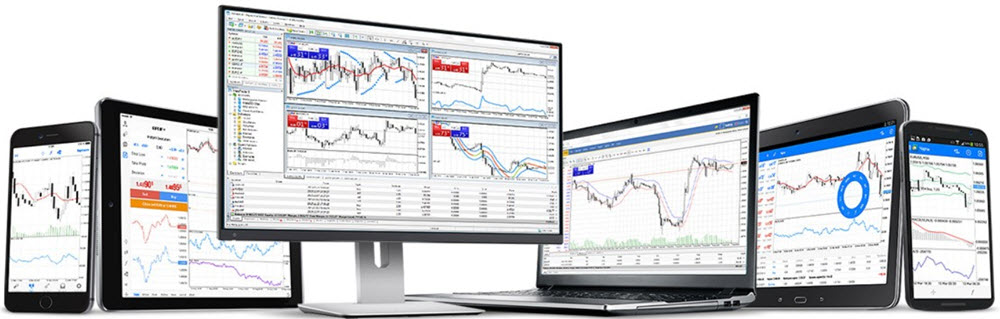
Which tradings platforms can you use when trading with the broker. Do they offer to trade in one single platform or can you choose among several different platforms? Can you use popular third-party platforms such as Meta Trader 4, Meta Trader 5, or Ninja Trader? Make sure you can use a platform you like. If the broker only provides access to their proprietary platform, then you should try trading using virtual money before you decide whether you want to deposit any real money to your account with the broker.
Check compatibility rather than assuming that a familiar platform supports every broker, account or instrument. Test the tasks you will perform repeatedly: entering position size, attaching stops, modifying orders and reviewing transaction history. A clear order ticket is especially valuable when trading quickly. Confirm whether your strategy is permitted under the account terms, including any restrictions relevant to scalping or automated trading.
Use a demo account to practise your complete routine, including recording trades and responding to connection problems. Demo results do not prove that live execution will match: fills, slippage and the pressure of risking money can differ. Before funding an account, contact support with a practical question and assess the response. Choose a broker whose costs, platform and account conditions support your trading plan, rather than letting its promotions determine how you trade.
This article was last updated on: September 28, 2026