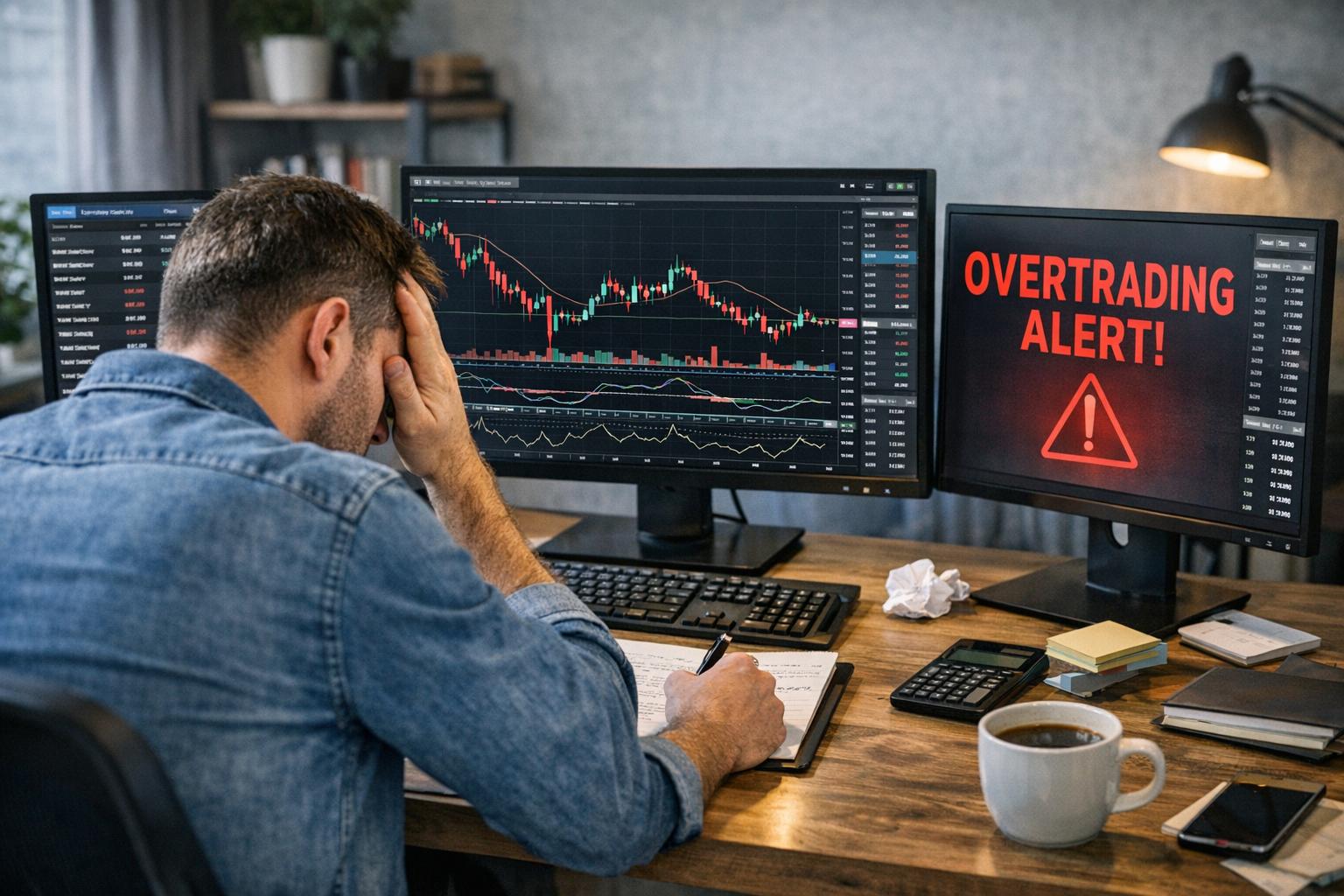
Understanding Overtrading in Forex
Overtrading in Forex day trading is a prevalent issue that can lead to substantial financial losses and long-term damage to a trader’s confidence and capital base. It typically involves excessive trading frequency, taking trades without valid setups, or opening positions that exceed predefined risk parameters. In many cases, overtrading also includes increasing position sizes beyond what one’s risk management strategy permits. While the behavior may appear productive on the surface, it often deteriorates account performance over time.
Overtrading frequently develops gradually. A trader may begin with a structured plan and disciplined approach, but market volatility, a series of losses, or even a sequence of wins can alter behavior. The accessibility of modern trading platforms, coupled with tight spreads and leveraged products, makes it easy to enter and exit trades rapidly. Without clear boundaries, this accessibility encourages constant activity, which can shift the focus from quality setups to quantity of trades.
This behavior often arises due to emotional triggers such as excitement, anxiety, frustration, or the urge to quickly recover financial setbacks. It may also stem from boredom, particularly during slow trading sessions, when traders feel compelled to “create” opportunities. Understanding overtrading is crucial for anyone engaged in Forex trading, as avoiding this pitfall can lead to more disciplined decision-making and more consistent long-term performance.
The Different Forms of Overtrading
Overtrading does not always present itself in the same manner. It can generally be divided into two broad categories: frequency-based overtrading and size-based overtrading. Frequency-based overtrading occurs when a trader executes too many trades within a given session, often without clear signals. Size-based overtrading involves risking too much capital on individual trades relative to account size and predefined limits.
Frequency-based overtrading often emerges in highly volatile market conditions. Rapid price movements can give the impression of multiple opportunities, leading traders to chase entries without confirmation. Conversely, in ranging or slow markets, traders may force trades out of impatience. In both scenarios, discipline erodes.
Size-based overtrading is often more dangerous because it magnifies losses quickly. Increasing lot sizes after a losing trade in an attempt to recover losses—a behavior associated with revenge trading—can significantly damage an account. Even experienced traders can fall into this trap if they abandon their risk parameters.
Another subtle form includes strategy switching. When traders repeatedly abandon one system in favor of another after short-term losses, they generate unnecessary trades and prevent statistical consistency from developing. This pattern fragments performance data and makes it difficult to evaluate genuine strategy effectiveness.
Recognizing the Signs of Overtrading
To effectively circumvent overtrading, traders need to recognize its early signs. One common indicator is an increased amount of time spent in front of trading screens, often accompanied by an incessant pursuit of trades without a coherent strategy. Monitoring every price fluctuation may create a false sense of control, but it often results in impulsive actions.
Another sign is deviation from predefined trading criteria. If a trader begins entering trades that do not fully meet the established setup conditions, it is often a signal that discipline is weakening. Similarly, taking trades outside designated trading hours or markets can indicate emotional influence rather than strategic reasoning.
A third indicator is emotional volatility linked to each trade outcome. Excessive satisfaction after wins or disproportionate frustration after losses often correlates with reactive trading behavior. Traders may find themselves increasing trade size after profits or seeking immediate re-entry after a stop-loss is triggered.
Frequent modifications of stop-loss or take-profit levels without structured justification also reflect overtrading tendencies. Adjusting risk mid-trade due to short-term price fluctuations rather than predefined trade management rules introduces inconsistency and undermines risk control.
Recognizing these signs is the first step toward mitigating the risks associated with overtrading. Awareness allows traders to pause and evaluate whether actions align with their long-term objectives and strategy parameters.
Developing a Strategic Trading Plan
A well-defined trading plan is vital to prevent overtrading. Such a plan should encompass detailed entry and exit strategies, risk management rules, and position sizing guidelines. The plan should clearly define the market conditions under which trading is permitted and specify when standing aside is appropriate.
A comprehensive trading plan typically includes:
Defined Market Conditions
Traders should specify whether their strategies are optimized for trending, ranging, or breakout conditions. If market structure does not match the strategy profile, refraining from trading can preserve capital and prevent unnecessary exposure.
Specific Entry Criteria
Entries should be based on measurable indicators, price action patterns, or quantitative signals. Clearly defined triggers reduce ambiguity and minimize the likelihood of entering trades based on assumption or impulse.
Objective Exit Methodology
Exit rules, including both stop-loss and take-profit placements, must be established before entering the trade. This reduces emotional decision-making during active positions.
Position Sizing Framework
A consistent approach to determining trade size—often based on a fixed percentage of total capital—maintains proportional risk exposure. Many professional traders risk between 1% and 2% of their capital per trade, but the exact figure varies depending on individual risk tolerance.
Traders must ensure that their strategies are grounded in thorough testing and rely on validated methodologies rather than speculative or untested assumptions. Backtesting and forward testing in demo environments can provide valuable performance data before live execution.
By adhering to a disciplined trading plan, traders can maintain consistency and make informed decisions grounded in predefined logic rather than emotional responses.
Implementing Risk Management
Effective risk management serves as a safeguard against the tendencies to overtrade. Establishing clear stop-loss levels and adhering to them diligently, even when emotions suggest otherwise, is essential. Stop-loss orders define maximum acceptable loss per trade and prevent minor setbacks from escalating into substantial drawdowns.
In addition to individual trade risk, traders should consider daily and weekly loss limits. For example, setting a rule to stop trading after reaching a fixed percentage drawdown within a single day can prevent emotional escalation and revenge trading. Once this limit is reached, the trader pauses until the next session.
Another effective control measure involves limiting the maximum number of trades executed within a specified timeframe. Predetermining trade frequency encourages selectivity and ensures that each trade meets established criteria.
Risk-reward ratios also play a central role. Designing setups where potential reward exceeds potential risk, such as a 2:1 or 3:1 ratio, supports long-term statistical stability. Even if win rates decline slightly, positive expectancy can be maintained through disciplined risk allocation.
Portfolio-level risk management is equally important. Correlated currency pairs can amplify exposure unintentionally. For instance, opening multiple positions that all involve the same base currency may increase systemic risk beyond intended levels.
These measures foster a structured approach to trading and reduce the likelihood of impulsive behavior leading to overtrading.
Maintaining Discipline and Emotional Control
Discipline is a cornerstone in addressing overtrading. Markets operate continuously during trading sessions, but opportunity does not persist uniformly. Accepting that inactivity is sometimes the most strategic choice requires restraint and patience.
Practicing emotional control is essential for maintaining rational decision-making. Emotional responses often originate from cognitive biases such as loss aversion, confirmation bias, and overconfidence. Recognizing these biases allows traders to distinguish between data-driven decisions and emotionally driven impulses.
Techniques such as structured journaling provide measurable benefits. Recording each trade’s rationale, execution quality, and emotional state enables pattern identification over time. If certain emotional conditions consistently precede poor outcomes, corrective adjustments can be implemented.
Mindfulness practices can also support focus. Short breaks between sessions, controlled breathing exercises, or scheduled review periods can reduce impulsive reactions. By maintaining a consistent mental environment, traders reduce the likelihood of engaging in excessive trading behavior.
Accountability mechanisms further strengthen discipline. For example, committing to predefined trading hours and reviewing adherence metrics weekly introduces measurable performance standards beyond profit and loss figures.
Utilizing Technology and Tools
Modern trading platforms provide an array of tools designed to help traders maintain structure and reduce the risk of overtrading. Features such as trade alerts, automated orders, and performance analytics can assist in implementing rule-based execution.
Automated stop-loss and take-profit placements prevent emotional interference once a trade is active. Some platforms allow conditional orders that trigger only when predefined criteria are met, reinforcing discipline.
Performance analytics dashboards offer insights into trading frequency, average hold times, win rates, and expectancy. By reviewing these metrics, traders can identify patterns that signal overtrading tendencies.
Algorithmic assistance, even in semi-automated forms, can reduce impulsive decisions. For example, preset trade templates with fixed risk parameters eliminate the need for manual lot size calculations under pressure.
Time-tracking tools can further reveal excessive screen exposure. If analytics show extended monitoring without strategic benefit, traders can adjust routines to maintain efficiency.
By leveraging these technological advancements, traders enhance procedural consistency and reduce emotional disruption.
Seeking Continuous Education and Improvement
Education plays a central role in preventing overtrading. When traders lack confidence in their strategies, they may compensate with excessive activity. A solid understanding of market structure, macroeconomic factors, and technical frameworks reduces uncertainty-driven trading.
Engaging in continuous learning through structured coursework, webinars, and financial literature strengthens analytical capability. Studying historical currency cycles, central bank policy trends, and global economic indicators deepens contextual awareness.
Backtesting and data analysis further reinforce understanding. Reviewing historical trades and simulating various market conditions can clarify how often valid opportunities truly occur. This data-driven perspective reduces the temptation to trade excessively during low-probability environments.
Periodic performance reviews are equally important. Rather than focusing solely on profit figures, traders should evaluate adherence to strategy rules, risk parameters, and emotional discipline metrics. Improvement initiatives can then target behavioral factors rather than purely financial outcomes.
Building a Support System
Establishing a structured support system can strengthen accountability and reduce isolation. Interaction with experienced traders, whether through professional networks or dedicated trading communities, introduces external perspectives.
Discussing trade rationale with peers can reveal whether decisions were strategically justified or impulsive. Constructive feedback often highlights inconsistencies that may not be apparent individually.
Mentorship arrangements can be particularly valuable for newer traders. Experienced professionals often emphasize patience and quality over frequency, reinforcing sustainable habits.
Transparency within a support network discourages reckless behavior. When traders know their performance metrics will be reviewed or discussed, adherence to plans typically improves.
Establishing Sustainable Trading Habits
Sustainable trading requires structured routines. Setting designated preparation periods before active sessions allows traders to assess economic calendars, identify key price levels, and align expectations. Post-session reviews provide opportunities to evaluate execution quality and behavioral consistency.
Sleep, physical activity, and balanced schedules contribute indirectly to disciplined trading. Cognitive fatigue increases susceptibility to impulsive decisions. Maintaining overall well-being therefore supports consistent execution.
Limiting exposure to constant market commentary can also reduce noise-driven trades. Not all information warrants action. Filtering inputs to align specifically with one’s strategy minimizes reactive behavior.
Gradual scaling of position sizes as experience and consistency improve is more sustainable than rapid capital expansion. Conservative growth reinforces stability and lowers the probability of emotional escalation.
Long-Term Perspective and Capital Preservation
A long-term perspective reduces pressure to generate immediate returns. Forex markets operate continuously, and opportunities recur. Recognizing this recurring nature helps traders resist urgency and avoid forced trades.
Capital preservation remains central to long-term participation. Overtrading accelerates drawdowns and reduces strategic flexibility. By contrast, measured activity preserves both financial resources and psychological resilience.
Professional trading often emphasizes consistency over intensity. Rather than maximizing the number of trades, experienced traders focus on maximizing expectancy per trade. This shift in perspective reframes inactivity as strategic rather than unproductive.
In conclusion, by understanding the causes and signs of overtrading, traders can implement structured strategies to significantly reduce associated risks. Fostering discipline, adhering to strategic plans, and prioritizing risk management create a framework conducive to long-term stability. Continuous education, technological support, and structured performance evaluation further enhance consistency. As traders refine emotional control and maintain systematic execution, they position themselves to navigate Forex markets with resilience and methodological clarity. Through structured discipline and sustained learning, overtrading can be minimized, allowing for measured and strategically aligned market participation.
This article was last updated on: March 28, 2026