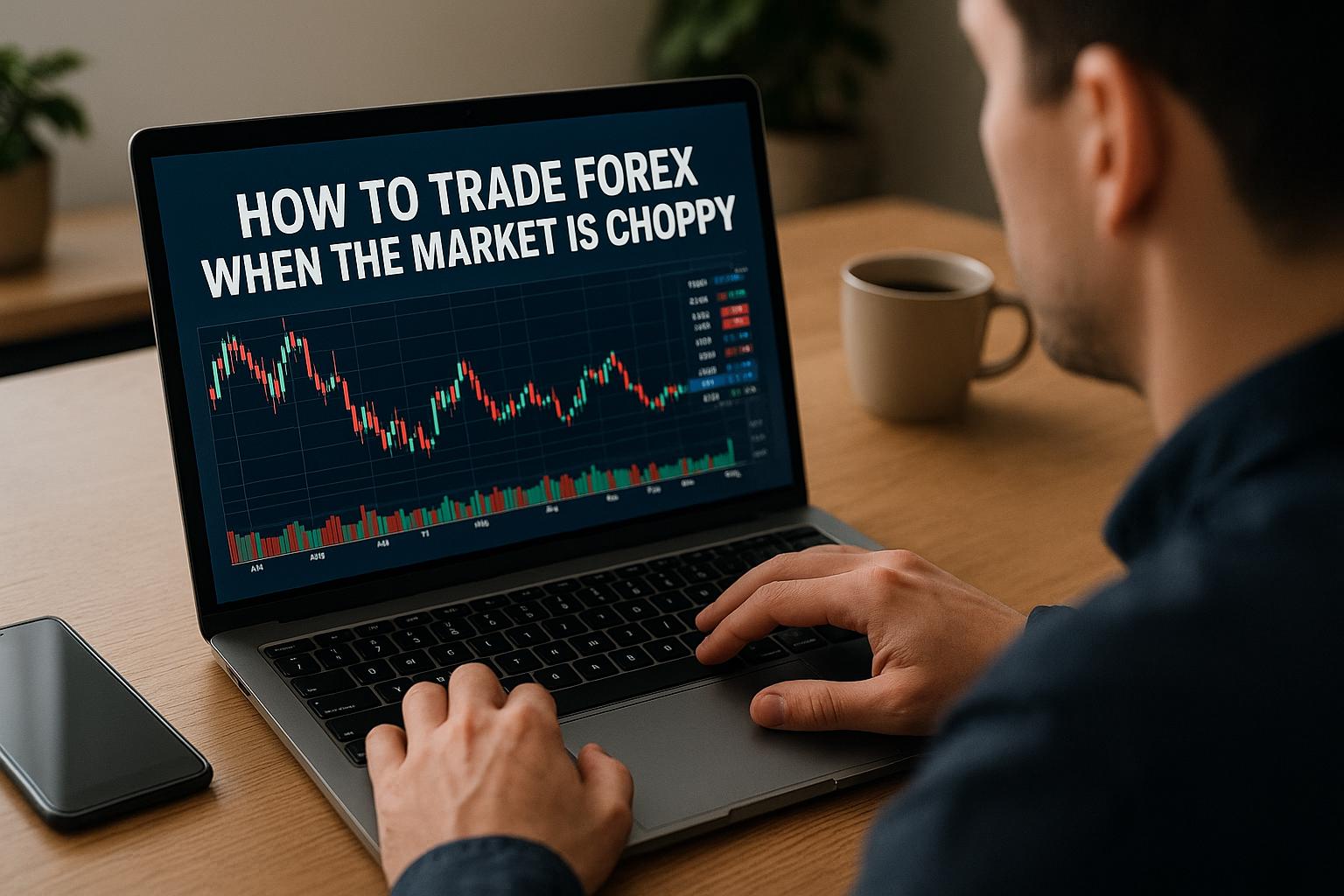
Understanding Choppy Market Conditions
In the world of currency trading, the foreign exchange market, also known as Forex, experiences various types of market conditions. Among these, a choppy market occupies a unique position. This type of market scenario is characterized by erratic price movements without a distinct direction. Essentially, this occurs when supply and demand reach a state of balance, causing the market to fluctuate within a confined range. During such times, traders often find it challenging to make decisions because of the absence of clear trends or directional cues.
Identifying Choppy Markets
Accurately identifying a choppy market is paramount for traders seeking to adapt their strategies effectively. Several indicators can aid in the recognition of these conditions. One such instrument is the Average True Range (ATR). The ATR is renowned for its ability to measure volatility within the market. When traders observe significant volatility while prices remain bounded within a range, it serves as an indication of choppiness. Moreover, examining multiple time frames allows traders to confirm the consistency of choppy market conditions across various durations, providing a comprehensive understanding of market behavior.
Strategies for Trading in Choppy Markets
Engaging in trading during choppy market phases necessitates modifications to conventional trading strategies. Here are key approaches to consider:
Range Trading: This strategy leverages support and resistance levels as a foundation. In choppy markets, prices have a propensity to oscillate between these predefined levels. Recognizing when the price is approaching these boundaries allows traders to make well-informed decisions regarding entries and exits. The reliance on support and resistance levels helps in capturing profits within the constrained price movements typically seen in choppy conditions.
Scalping: The nature of choppy markets, with their limited price extensions, makes short-term strategies like scalping particularly appealing. Scalping involves profiting from minute price fluctuations by executing numerous small trades. This approach aims to accumulate multiple incremental gains, foregoing the hunt for significant price moves that may be more prevalent in trending markets.
Avoid Trend Following: Due to the lack of a clear market direction, trend-following strategies often underperform in choppy markets. Traders employing such strategies should exercise caution and avoid reliance until a definitive trend emerges. Being adaptable to prevailing market conditions is vital for maintaining effective trading performance.
Risk Management in Choppy Markets
Risk management takes on heightened importance during choppy markets, primarily due to the unpredictable nature of price fluctuations. Implementing sound risk management strategies can protect traders from unexpected losses:
Tight Stop-Losses: During these unpredictable times, employing tight stop-losses serves as a mechanism to minimize exposure to sharp adverse price movements. Tightening stop-loss orders ensures that traders exit positions promptly in the event of unforeseen volatility.
Position Sizing: Adjusting position sizes is a prudent risk management tactic in choppy markets. By reducing the size of trades, traders can mitigate potential losses and enhance their ability to withstand the inherent volatility. Trading smaller lots acts as a buffer, safeguarding traders from the full impact of unpredictable price swings.
Conclusion
Though trading in choppy markets may present challenges, traders who apply specific strategies and adhere to robust risk management protocols can increase their chances of success. Staying informed about market dynamics and adapting to evolving conditions is crucial for effective forex trading. To further enhance their understanding and skills, traders can explore additional resources available on educational platforms dedicated to forex trading, such as BabyPips and Forex Factory. By engaging with these resources, traders can gain valuable insights and continue to refine their strategies for navigating the complexities of choppy market conditions.
This article was last updated on: July 25, 2026