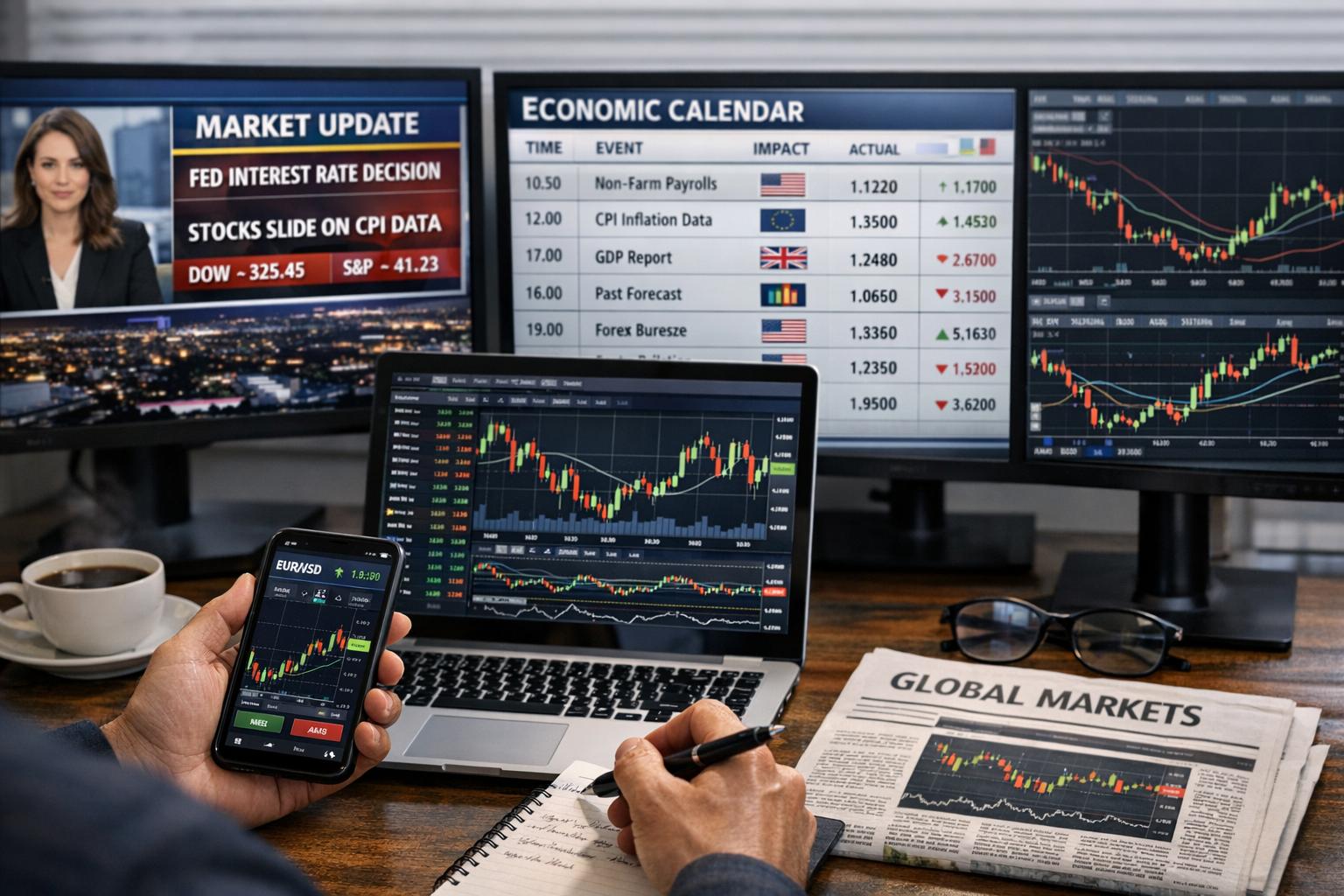
The Influence of Market News
Market news plays a crucial role in the dynamics of forex day trading. The forex market is highly sensitive to information, and any significant news event can lead to noticeable and sometimes immediate shifts in currency prices. Because currencies reflect the relative strength of one economy against another, any update that alters expectations about economic performance, monetary policy, or political stability can influence exchange rates. Day traders, who operate on shorter time frames, are particularly exposed to these movements and must remain attentive to a continuous stream of information.
Unlike some financial markets that operate within limited hours, the forex market functions twenty-four hours a day during the trading week. This continuous structure means that market news released in one region can rapidly affect currency pairs across the globe. A policy announcement in the United States can influence Asian trading sessions, while developments in Europe may shape price behavior during North American hours. As a result, forex participants frequently monitor global news outlets, official government releases, and financial data providers to remain aware of shifting conditions.
The influence of market news is not limited to the content of announcements. Expectations, forecasts, and prior positioning also shape how currencies respond. In many cases, it is not the absolute value of an economic figure that drives price movement, but the difference between the reported result and what market participants anticipated. If traders expect strong economic data and the release merely meets expectations, price movement may be limited. Conversely, unexpected deviations can generate volatility as traders adjust positions to reflect new information.
Types of Market News
Market news can be categorized into several types, each having a distinct impact on forex trading. Although these categories often overlap, understanding their characteristics helps traders assess potential risks and opportunities.
Economic Data Releases: These include Gross Domestic Product figures, employment statistics, inflation metrics, retail sales reports, manufacturing indexes, and consumer confidence surveys. Such data provide measurable insights into a country’s economic condition. For example, rising employment levels may signal economic expansion, while elevated inflation could influence monetary tightening. Day traders evaluate whether economic releases strengthen or weaken a currency relative to others.
Central Bank Announcements: Decisions issued by institutions such as the Federal Reserve, the European Central Bank, or the Bank of Japan often have a substantial effect on exchange rates. Changes in policy interest rates, asset purchase programs, or inflation targets can quickly alter capital flows. Even when no policy changes occur, the language used in official statements may signal future adjustments. Traders analyze tone, forward guidance, and voting patterns within policy committees to assess direction.
Geopolitical Events: Political developments such as elections, trade negotiations, regulatory reforms, or international conflicts introduce uncertainty into the market environment. Currency values may shift in response to perceived stability or instability. In some instances, geopolitical risk can trigger capital movement toward currencies regarded as more stable or liquid. For day traders, these shifts can translate into rapid intraday price changes.
Unexpected News: Not all market-moving events are scheduled. Natural disasters, sudden political announcements, or unanticipated financial disruptions can occur without warning. These events can create gaps in pricing and sharp intraday swings. Traders who rely solely on technical signals without consideration of external developments may encounter increased exposure during such periods.
Global Economic Indicators
The forex market operates within the framework of a global economy, making international economic indicators particularly relevant. Indicators such as the U.S. Non-farm Payroll report, interest rate decisions by the European Central Bank, and China’s Gross Domestic Product growth figures are routinely monitored by traders around the world. Because forex pairs represent two currencies, developments in either country can influence valuation.
International trade data also contribute to currency dynamics. Current account balances, export figures, and import statistics provide insight into trade relationships and capital flows. A country that consistently exports more than it imports may see sustained demand for its currency. Conversely, persistent trade deficits can weigh on exchange rates if not offset by investment inflows.
Another factor involves comparative economic performance. Even if two economies experience growth, the currency belonging to the faster-growing economy may strengthen relative to the other. Therefore, day traders often assess data comparatively rather than in isolation. The relationship between two sets of economic indicators can carry more weight than any single data release.
The Role of Economic Events
Economic events are scheduled occurrences that can have a measurable impact on currency prices. Unlike unscheduled news, these events are typically announced in advance, giving traders time to prepare. Preparation does not eliminate risk, but it allows traders to structure their strategies in anticipation of potential volatility.
Scheduled economic releases create periods of concentrated attention in the forex market. Liquidity providers, institutional participants, and retail traders frequently adjust orders just before an announcement. Bid-ask spreads may widen temporarily as market participants manage risk. Immediately following a high-impact release, volatility can increase as automated trading systems and discretionary traders respond.
In many instances, the initial reaction to economic events can be swift but temporary. Prices may spike in one direction and then partially retrace as traders reassess the broader context. This behavior highlights the importance of distinguishing between short-term reaction and sustainable trend change. Day traders must decide whether to trade the immediate volatility or wait for directional confirmation.
Understanding Economic Calendars
Day traders often use economic calendars to keep track of upcoming events. These calendars list the date, time, and expected importance of scheduled releases. They also provide forecasts and previous figures, enabling market participants to compare anticipated results with historical performance. By consulting an economic calendar at the start of each trading session, traders can avoid unexpected exposure during key announcements.
The structure of an economic calendar allows traders to filter events based on currency relevance and projected impact. For instance, a trader focusing on the EUR/USD pair may prioritize European Central Bank decisions as well as U.S. employment data. Awareness of release times also helps traders manage open positions, particularly when trading with leverage. Some may choose to reduce position size or temporarily exit trades ahead of significant announcements.
High-Impact vs. Low-Impact Events
Economic events are generally classified based on their expected impact on the forex market. Although classifications vary by provider, the structure helps traders prioritize attention.
High-Impact Events: Events such as central bank interest rate decisions, major employment reports, or inflation releases often lead to substantial volatility. Liquidity may thin momentarily, and price fluctuations can accelerate within seconds. Traders approach these releases with structured risk management, recognizing that slippage and rapid movement are possible.
Low-Impact Events: Releases involving secondary economic indicators or revisions to previously issued data often result in moderate or limited reactions. These events may influence intraday price action but rarely alter broader sentiment on their own. Traders sometimes incorporate them into ongoing analysis without significantly adjusting risk exposure.
The classification of events is dynamic rather than fixed. For example, inflation data may carry heightened significance during periods when central banks signal potential policy shifts, while the same data might attract less attention under stable conditions. Context therefore determines impact.
Strategic Implementation
The preparation and reaction to economic events require structured planning. Traders may adjust leverage, refine entry points, or temporarily pause trading during periods of anticipated volatility. Hedging strategies, including offsetting positions in correlated currency pairs, are sometimes used to manage uncertainty. By structuring orders ahead of time, traders seek to limit adverse outcomes while retaining the ability to benefit from favorable moves.
Strategic implementation frequently includes predefined exit criteria. Rather than reacting impulsively to price fluctuations, disciplined traders define acceptable risk parameters before the event occurs. This measured approach helps maintain consistency across trading sessions, especially when markets move quickly.
Strategies for Incorporating News and Events
Successful forex day trading involves understanding not only the relevance of market news and economic events but also the structured integration of this information into trading methods. Strategies may vary depending on trading style, time horizon, and tolerance for volatility. Some participants aim to trade breakouts triggered by data releases, while others wait for market stabilization before entering positions.
Preparing for Economic Announcements
Before major announcements, traders often conduct focused preparation. This process begins with reviewing the consensus forecast and analyzing how the currency pair has reacted to similar events in the past. Patterns of historical volatility can inform expectations for price range expansion. Preparation also involves identifying key support and resistance levels that may serve as reference points once the release occurs.
Analyzing Historical Data: Reviewing previous market responses to comparable releases helps identify recurring tendencies. For instance, employment data may consistently produce rapid short-term spikes followed by consolidation. Although past performance does not guarantee future outcomes, historical behavior provides context for evaluating risk.
Setting Stop-Loss Orders: To mitigate risks associated with high-impact events, traders often establish stop-loss orders. These orders are positioned at logical technical levels rather than arbitrary distances. The intention is to protect capital if price movement invalidates the trade premise. In volatile conditions, traders may also consider adjusting position size to account for expanded price ranges.
Scenario Planning
Scenario planning involves outlining potential outcomes before the release occurs. A trader might consider how the market would likely respond if data significantly exceeds forecasts, matches expectations, or falls below projections. Each scenario can be paired with a planned response, reducing the need for rapid improvisation during volatile conditions.
This structured foresight supports disciplined behavior. Rather than reacting solely to immediate price movement, traders can compare real-time developments with pre-planned scenarios. Such preparation enhances consistency and reduces the influence of short-term uncertainty.
News-Based Trading
Some traders adopt a news-based trading approach in which decisions are directly influenced by economic releases and headlines. This method often relies on rapid information processing and efficient execution systems.
Monitoring News Feeds: Access to real-time news services enables traders to observe developments as they occur. Timeliness is important because market responses may unfold within seconds. Traders may use multiple data streams to ensure comprehensive coverage of relevant regions and currencies.
Quick Decision-Making: News-based trading requires structured but responsive thinking. Traders typically rely on predefined frameworks for interpreting surprises in economic data. Instead of improvising, they compare the actual result with forecasts and apply established criteria for entering or exiting positions.
Information Verification
Reliable information is fundamental in news-based trading. False reports or misinterpretations can lead to unnecessary losses. Traders often verify headlines through multiple reputable outlets before acting. In certain cases, algorithms may respond automatically to numeric data releases, while discretionary traders confirm contextual details before committing capital.
Verification processes may include comparing figures with official government sources or reviewing central bank statements directly. By emphasizing accuracy, traders reinforce analytical consistency and reduce exposure to misleading signals.
Balancing Technical Analysis
While news and economic events are pivotal, they are not the sole drivers of forex price action. Many traders integrate technical analysis with fundamental insights. Technical indicators such as moving averages, relative strength measures, and price patterns help identify potential entry and exit zones. When combined with awareness of scheduled events, technical tools provide structure for execution.
Utilizing Technical Indicators: Traders often align technical signals with fundamental context. For example, a breakout above resistance coinciding with strong economic data may reinforce conviction in a directional move. Conversely, if technical indicators contradict a news-driven surge, traders may exercise caution before entering positions.
Assessing Long-Term Trends: Although day trading focuses on short-term intervals, broader trend direction influences intraday bias. Awareness of prevailing macroeconomic trends helps traders avoid trading aggressively against sustained momentum. If a currency remains in a long-term appreciation phase supported by strong economic performance, short-term pullbacks may be evaluated differently than in a declining environment.
Iterative Learning
Through iterative learning, traders refine their strategies by analyzing past trades and assessing performance metrics. Maintaining detailed trading records enables evaluation of how specific economic events influenced outcomes. Over time, patterns of strength and weakness become evident. Traders may identify that certain releases consistently produce erratic price action not aligned with their approach, leading them to avoid those periods in the future.
Back-testing strategies against historical data provides additional perspective. By simulating how a strategy would have performed during previous high-impact releases, traders can estimate potential risk exposure. Although historical analysis does not ensure future results, it strengthens understanding of structural behavior within the forex market.
The interaction between market news, economic events, and trading strategy remains an ongoing process of adjustment. As monetary policies evolve, geopolitical conditions shift, and market participation changes, the relative influence of various events may also transform. Day traders who systematically incorporate news awareness, structured preparation, and balanced technical analysis maintain greater adaptability within a continuously evolving global currency market.
This article was last updated on: March 28, 2026