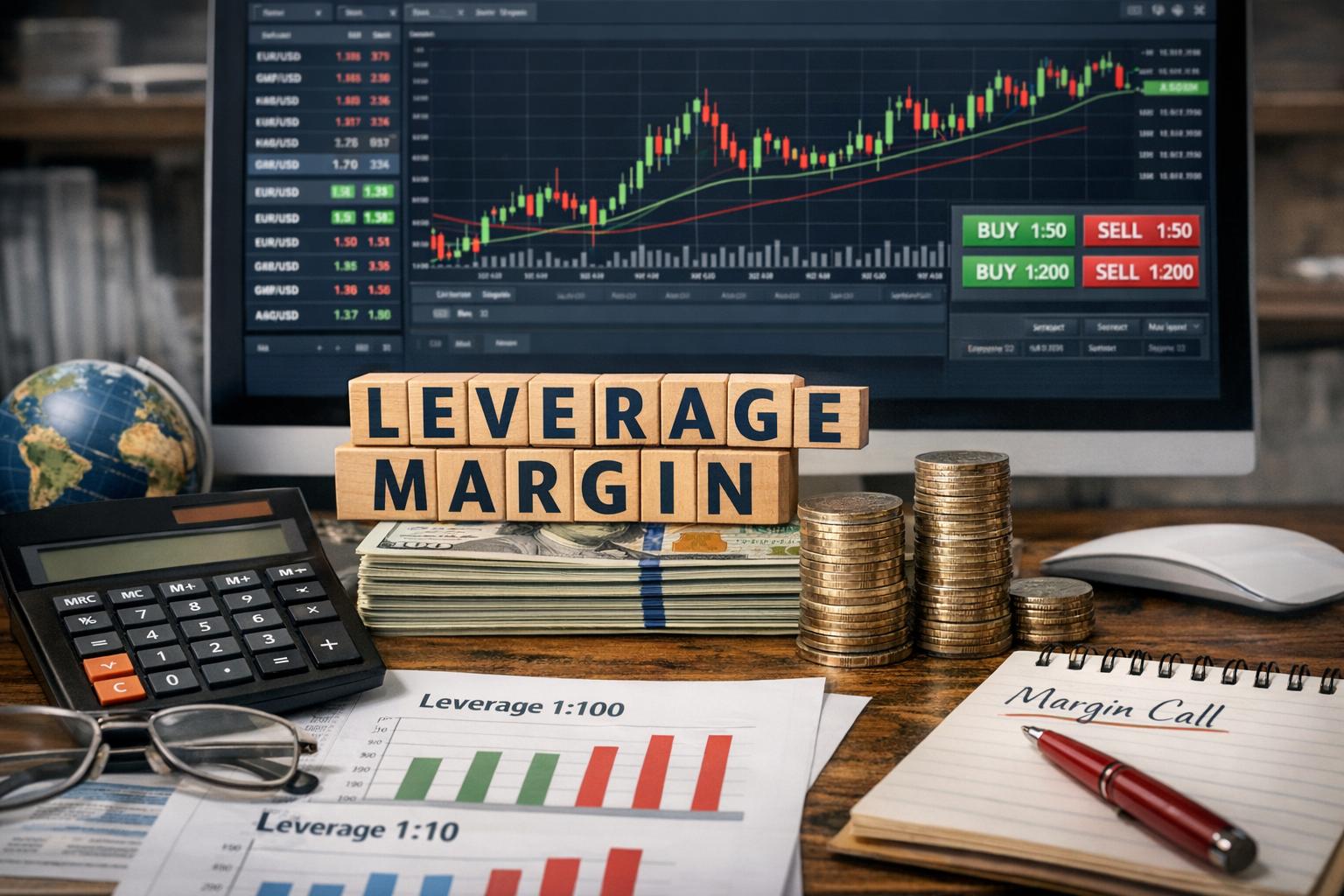
Understanding Leverage and Margin in Forex Day Trading
Forex day trading can be a lucrative venture, but it requires a sound understanding of various financial mechanisms, particularly leverage and margin. These two concepts are pivotal to trading in the forex market, and understanding them can help traders manage risks more effectively. Because forex markets operate with relatively small price movements compared to many other financial instruments, leverage and margin play a central role in shaping both potential returns and potential losses. A clear, structured understanding of how they function is essential before engaging in active trading.
The foreign exchange market is decentralized and operates twenty-four hours a day during the business week. Participants include banks, hedge funds, corporations, governments, and retail traders. Retail day traders typically access the market through online brokers who provide leveraged trading accounts. Without leverage, many short-term trading strategies would produce marginal returns due to limited daily currency fluctuations. However, leverage is a double-edged mechanism that requires disciplined application.
What is Leverage in Forex Trading?
Leverage in forex trading refers to the use of borrowed capital to increase the potential return on investment. In forex, leverage allows traders to control a larger position than what would typically be possible with their own capital. Forex brokers offer leverage as part of their trading services, enabling traders to enter positions with high value without needing a large capital base.
For instance, a common leverage ratio offered by brokers might be 100:1. This means that with $1,000 of your own money, you can control a forex position of up to $100,000. The concept is an integral feature of forex trading and differentiates it from other financial markets. However, it is vital to understand that, while leverage can amplify profits, it can also exacerbate losses.
Leverage ratios vary widely depending on jurisdiction and broker policy. In some regions, regulatory authorities impose strict caps on maximum leverage available to retail traders. For example, certain regulators limit leverage on major currency pairs to 30:1 or 50:1 to reduce systemic risk. In other regions, brokers may offer leverage of 200:1, 400:1, or higher. The availability of high leverage does not necessarily imply it should be fully utilized. Effective traders often employ leverage conservatively relative to the maximum permitted.
At its core, leverage functions as a multiplier. If a trader uses 50:1 leverage, a 1% movement in the underlying currency pair equates to a 50% change in the trader’s margin allocation for that position, assuming a fully leveraged trade. This magnification effect highlights the need for strong risk management practices when engaging in leveraged day trading.
Margin Explained
Margin is closely related to leverage and is a critical concept in forex trading. Margin refers to the amount of money a trader needs to deposit to open a position with leverage. Rather than a cost of trading, it is more accurately described as a good faith deposit that a trader puts up as collateral to cover potential losses.
There are two main types of margin in forex trading: initial margin and maintenance margin. The initial margin is the amount needed to open a position, while the maintenance margin is the minimum amount of equity required to keep the position open. If a trader’s account equity falls below the maintenance margin, a broker may initiate a margin call, requiring the trader to deposit more funds or close positions to mitigate potential losses.
Margin is typically expressed as a percentage of the total trade size. For example, a 1% margin requirement corresponds to 100:1 leverage. A 2% margin corresponds to 50:1 leverage. The relationship is inversely proportional. As margin requirements increase, maximum leverage decreases.
When a position is opened, the required margin amount is set aside from the trader’s available balance. This is often referred to as used margin. The remaining available funds are called free margin. Account equity reflects the current account balance adjusted for unrealized profits or losses. Monitoring these figures is essential for maintaining adequate risk control during active trading sessions.
The Relationship Between Leverage and Margin
Leverage and margin are mathematically connected. Leverage determines how much exposure a trader can obtain relative to their invested capital, while margin defines how much capital must be committed to hold that exposure. If a trader selects high leverage, the margin requirement per trade decreases, which allows more positions to be opened simultaneously. This can increase both diversification and risk.
Consider a trader who wishes to open a $50,000 position on EUR/USD. If the broker requires 2% margin, the trader must commit $1,000 as margin. If the broker requires 5% margin, the trader must commit $2,500. The higher requirement reduces leverage and restricts exposure. This structural control mechanism is designed to protect both the trader and the broker from excessive loss.
Because forex day traders often open and close multiple positions within a single trading day, understanding real-time margin usage is necessary. A single large position can significantly reduce free margin, limiting flexibility for additional trades or adjustments.
Calculating Leverage and Margin
Understanding how to calculate leverage and margin is crucial for any forex day trader. Leverage is calculated by dividing the total transaction value by the required margin. For example, if a trader has an account with $1,000 and uses a leverage of 100:1, they can potentially trade up to $100,000 in currency.
Margin requirements vary from one broker to another but are typically expressed as a percentage of the full position size. For example, for a position size of $100,000, if a broker requires 1% margin, a trader must deposit $1,000 as margin.
In practical trading environments, currency positions are often quoted in standard lots, mini lots, and micro lots. A standard lot typically represents 100,000 units of the base currency. A mini lot represents 10,000 units, and a micro lot represents 1,000 units. Margin requirements apply proportionally to these lot sizes. Smaller lot sizes allow traders to fine-tune their exposure and reduce risk concentration.
Moreover, profit and loss are typically measured in pips, which represent standardized price movements in currency pairs. Because leverage magnifies pip value relative to invested capital, traders must understand how pip value interacts with position size and leverage to avoid unintended exposure.
Margin Calls and Stop-Out Levels
A critical aspect of margin trading involves understanding margin calls and stop-out levels. A margin call occurs when account equity falls below a broker-defined threshold, often expressed as a percentage of used margin. When this happens, traders may be required to deposit additional funds or reduce exposure.
If equity continues to decline and reaches the stop-out level, the broker may automatically close one or more positions to prevent further losses. This automated liquidation protects the broker from negative account balances and limits systemic risk. Stop-out levels vary between brokers and may range from 20% to 50% of used margin.
Day traders must monitor margin level ratios, often displayed as:
Margin Level (%) = (Equity / Used Margin) × 100
Maintaining a margin level comfortably above broker thresholds allows for normal price volatility without forced liquidation. Sudden market events or sharp intraday movements can rapidly erode margin levels if leverage is excessive.
Risks and Considerations
While leverage can amplify gains, it also poses significant risks. High leverage means that even a small adverse movement in the forex market can lead to substantial losses. Thus, it is crucial for traders to use leverage judiciously and have a thorough understanding of both the potential rewards and risks.
Similarly, margin trading involves its risks. A trader’s positions can be liquidated if they fail to meet margin requirements, leading to severe financial losses. Traders should be aware of the terms of their margin accounts and monitor their holdings closely.
Market volatility is a central consideration. Economic announcements, geopolitical developments, and unexpected central bank actions can cause rapid currency fluctuations. In highly leveraged accounts, such movements may produce losses that accumulate faster than manual intervention allows. Slippage and widened spreads during volatile periods can further complicate trade execution.
Another consideration involves overexposure through correlated positions. Holding multiple trades that depend on the same underlying currency can amplify effective leverage beyond intended levels.
Strategic Use of Leverage and Margin
To mitigate these risks, day traders should develop a robust trading plan. This plan should include clearly defined entry and exit points, along with a comprehensive risk management strategy. Utilizing stop-loss orders can help traders limit potential losses by automatically closing a position at a predetermined price level.
Moreover, traders should be mindful of their leverage ratios, ensuring that the level of borrowing aligns with their risk tolerance. It’s crucial to start with lower leverage levels, especially for beginners, to understand the intricacies of forex trading without exposing themselves to undue risk.
Position sizing models are commonly used to control leverage exposure. Rather than using maximum available leverage, many traders risk a fixed percentage of account equity per trade, often between 1% and 2%. By adjusting lot size instead of increasing leverage, traders can scale exposure responsibly.
Intraday traders also consider time-based exposure. Positions held for shorter durations may justify different leverage approaches compared to overnight trades that carry swap charges and gap risks.
Leverage, Margin, and Broker Selection
Selecting the right broker is also instrumental in managing leverage and margin effectively. Traders should look for brokers with transparent policies on leverage and margin requirements. It’s important that the broker provides comprehensive educational resources and customer support to help traders navigate these complex concepts.
Some brokers offer variable leverage, which allows experienced traders to adjust their leverage based on market conditions and specific trading strategies. However, it’s essential to stay informed about regulatory changes that might affect leverage limits, as these can vary across different regions and countries.
Execution quality, margin call procedures, negative balance protection policies, and segregated account structures are additional considerations. Clarity in documentation ensures traders understand when and how margin calls are triggered and how forced liquidation occurs.
Further Learning
Understanding leverage and margin requires a good grasp of broader forex trading strategies and risk management techniques. For those interested in enhancing their trading skills, resources and courses are available online. Brokers and educational platforms often offer detailed guides that can help deepen your knowledge. For more information on forex trading concepts, consider visiting resources such as Babypips or your preferred broker’s educational materials.
Engagement with trading communities and forums can also be beneficial. These platforms provide opportunities to learn from experienced traders, share insights, and stay updated with market trends and news. Continuous education is key to maintaining technical competence in evolving market conditions.
The Role of Technology in Leverage and Margin
The advent of trading technology has significantly influenced how traders interact with leverage and margin. Advanced trading platforms offer real-time data and analytics, enabling traders to make informed decisions. Features such as leverage calculators and automated trading systems can help manage positions and optimize trading strategies.
Many platforms provide automatic margin monitoring tools, real-time equity updates, and alerts that notify traders if margin levels approach critical thresholds. These technological advancements reduce the likelihood of unexpected liquidations caused by inattention.
However, traders should exercise caution when using automated systems, as they can sometimes lead to over-leveraging or unintended trades. It’s vital to remain engaged and monitor automated actions to ensure they align with established trading goals.
Conclusion
In conclusion, while leverage and margin are powerful tools in forex day trading, they should be used with caution. Comprehensive knowledge and a disciplined approach to trading can help mitigate the inherent risks and enhance trading outcomes. Understanding leverage and margin in depth, alongside effective risk management, can significantly contribute to a trader’s long-term sustainability in the dynamic forex market.
This article was last updated on: March 28, 2026