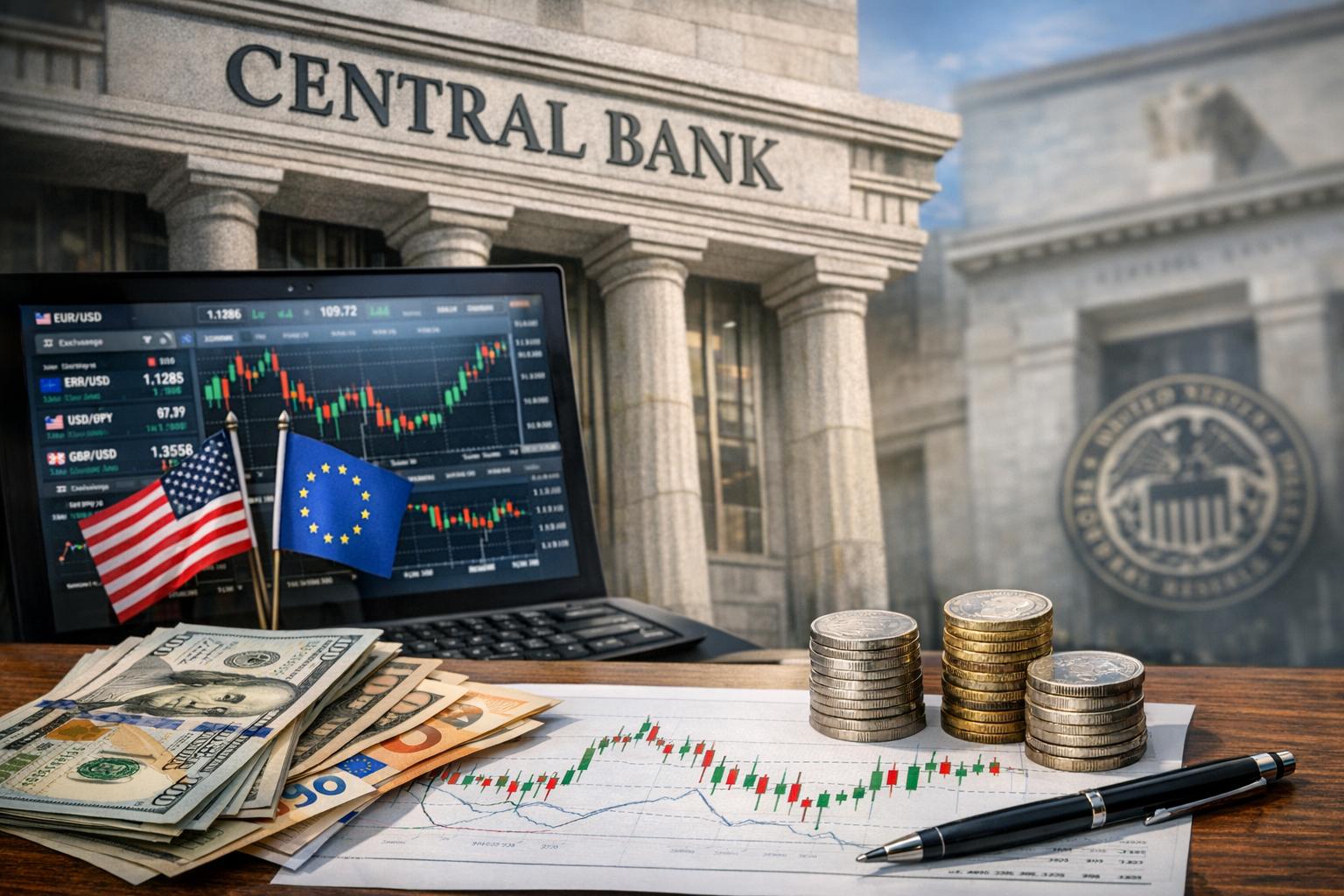
The Role of Central Banks in Forex Markets
Central banks occupy a critical role in global financial systems, especially within the foreign exchange (Forex) markets. These institutions are at the center of economic policy-making, and their actions have profound effects on currency values and market dynamics. Understanding the multifaceted role of central banks in Forex markets unveils how they contribute to economic stability and growth at a national and international level.
The foreign exchange market is the largest and most liquid financial market in the world, with daily trading volumes measured in trillions of dollars. Within this decentralized marketplace, currencies are continuously exchanged for trade, investment, hedging, speculation, and reserve management purposes. Although private institutions, corporations, hedge funds, and retail traders represent substantial participation in Forex trading, central banks remain uniquely influential. Their mandates, policy instruments, and communication frameworks give them the capacity to shape expectations, liquidity conditions, and long-term currency trends.
Central banks differ in structure and mandate across jurisdictions, yet they share core objectives. Most operate under legal frameworks that prioritize price stability, frequently accompanied by additional goals such as maximum employment, financial system stability, or sustainable economic growth. Because exchange rates directly influence inflation, capital flows, and trade competitiveness, Forex markets lie at the intersection of these policy objectives.
Monetary Policy and Forex Markets
The primary responsibility of central banks, such as the Federal Reserve, the European Central Bank, and the Bank of Japan, is to implement monetary policy. These policies directly influence currency values, as they are designed to manage inflation, unemployment, and economic growth. Through various mechanisms, central banks exert control over financial conditions, thereby affecting the Forex markets.
Monetary policy decisions shape investor perceptions of a country’s economic trajectory. Since currencies are priced relative to one another, even subtle divergences in policy between two economies can generate significant exchange rate movements. Traders and institutional investors closely monitor policy meetings, voting patterns within monetary committees, and macroeconomic projections released by central banks.
Interest Rates: Interest rates are a central tool in the arsenal of monetary policy. By adjusting the benchmark interest rate, a central bank can influence the flow of capital across borders. An increase in interest rates tends to attract foreign investments; as investors seek higher returns, the demand for the domestic currency rises, leading to an appreciation in its value. Conversely, a decrease in interest rates might deter foreign investment, causing a depreciation in the currency.
Interest rate differentials between countries form the foundation of many Forex trading strategies. For example, in a carry trade, traders borrow in a currency with low interest rates and invest in one with higher rates, profiting from the yield spread. When central banks signal impending rate changes, the expected shift in these differentials can produce rapid currency adjustments even before official decisions are implemented.
Beyond nominal rates, markets also evaluate real interest rates, which adjust nominal yields for inflation. If inflation rises faster than interest rates, real returns decline, potentially weakening the currency. Therefore, central bank credibility in maintaining inflation targets has direct implications for exchange rate stability.
Quantitative Easing (QE): In circumstances where traditional monetary policy tools are insufficient, central banks may resort to quantitative easing. QE involves large-scale purchases of securities to inject liquidity into the economy, aiming to lower interest rates and foster economic activity. While this increase in money supply typically stimulates the economy, it can devalue the currency due to the augmented supply in the market, impacting Forex trading strategies and investor behavior.
Quantitative easing became widely used after the global financial crisis and during subsequent economic disruptions. By expanding their balance sheets, central banks lowered long-term borrowing costs and signaled commitment to accommodative policy. Forex markets interpreted these measures as indicators of prolonged low yields, which often placed downward pressure on currencies implementing QE relative to those maintaining tighter policy stances.
When central banks later shift toward quantitative tightening, reducing asset holdings and shrinking balance sheets, the reversal can strengthen the currency as liquidity conditions tighten and yields rise. The anticipation of these transitions frequently drives substantial exchange rate volatility.
Exchange Rate Regimes and Policy Frameworks
The degree of central bank influence in Forex markets depends significantly on the exchange rate regime adopted by a country. Broadly, regimes range from free-floating systems to fixed or managed exchange rate arrangements.
In a floating regime, currency values are primarily determined by market forces. Central banks do not target a specific exchange rate level but may still influence currency values indirectly through monetary policy. Most major economies, including the United States, the Eurozone, and Japan, operate under floating systems.
Under a fixed or pegged regime, a central bank commits to maintaining its currency at a predetermined value against another currency or basket of currencies. This requires active intervention in Forex markets and sufficient foreign exchange reserves to defend the peg. In such systems, domestic monetary policy is often subordinated to maintaining exchange rate stability.
Managed floats represent an intermediate approach, where exchange rates are allowed to fluctuate within implicit or explicit boundaries. Central banks intervene periodically to smooth volatility or prevent disorderly market conditions without committing to a rigid peg.
The choice of regime affects how market participants interpret central bank behavior. In pegged systems, traders closely monitor foreign reserve levels and intervention capacity. In floating systems, attention shifts toward macroeconomic data and policy guidance.
Currency Interventions
Central banks sometimes engage in direct currency interventions as a strategy to influence their currency’s value. These interventions involve the central bank buying or selling its currency against foreign currencies, often to achieve a desired exchange rate level.
Intervention can be categorized as sterilized or unsterilized. In sterilized intervention, the central bank offsets the monetary impact of currency transactions through open market operations, maintaining domestic money supply levels. In unsterilized intervention, no offsetting measures are taken, allowing the intervention to alter liquidity conditions directly.
While interventions can provide short-term exchange rate stability, they are often a response to broader economic concerns. For instance, when the Swiss National Bank intervenes to manage the Swiss franc’s value, it indicates efforts to safeguard its economy from excessive appreciation, which could harm export competitiveness and economic growth.
Such interventions can have ripple effects as traders interpret these moves as signals of underlying economic conditions, prompting them to amend their trading positions. Additionally, the effectiveness and frequency of interventions vary across economies, influenced by market size and the currency’s reserve status.
In highly liquid currency pairs such as EUR/USD or USD/JPY, sustained interventions require substantial resources, making coordination with other central banks more impactful. Historical instances of coordinated intervention demonstrate that multilateral action can alter market expectations more effectively than unilateral measures.
Foreign Exchange Reserves Management
Central banks hold foreign exchange reserves composed of foreign currencies, gold, and other reserve assets. These reserves serve multiple functions: supporting currency stability, providing liquidity during financial stress, and maintaining confidence in the nation’s financial system.
Reserve accumulation often reflects long-term policy objectives. Export-oriented economies may accumulate reserves to prevent excessive appreciation by purchasing foreign assets. Conversely, during periods of capital outflow, reserves may be deployed to stabilize the currency by supplying foreign exchange liquidity.
Reserve composition decisions can also affect Forex markets. Adjustments in the currency allocation of large reserve portfolios may shift demand patterns. While central banks typically implement gradual diversification strategies to avoid market disruption, even modest changes can draw attention in global markets.
Communication Strategies
Central banks utilize communication as a tool to influence market conditions and expectations. Communication strategies can significantly affect how monetary policy impacts the Forex markets.
Forward Guidance: One such strategy is forward guidance, where central banks clearly articulate their future policy intentions. Through press releases, reports, and public addresses, they offer markets insight into expected monetary policy actions. This preemptive guidance helps manage investor expectations and reduce market volatility by allowing investors to account for anticipated changes in policy.
Forward guidance may be time-based, indicating a likely duration for policy settings, or state-contingent, linking future decisions to economic outcomes such as inflation or employment thresholds. Forex traders analyze the language of policy statements carefully, noting shifts in tone that might indicate changes in the policy trajectory.
For example, the Federal Reserve’s use of forward guidance provides transparency to the markets, allowing investors to adjust their strategies in advance. Consequently, this can prevent abrupt shifts in market dynamics that might arise from unexpected policy changes.
Beyond formal statements, speeches by central bank governors and meeting minutes can influence currency valuations. Even minor variations in wording, such as describing inflation risks as “persistent” instead of “transitory,” may alter expectations and exchange rate trends.
Central Bank Independence and Credibility
The effectiveness of central bank influence in Forex markets depends heavily on perceived independence and credibility. A central bank that operates free from direct political pressure is generally more capable of maintaining stable inflation expectations. Stable expectations reinforce currency stability.
If markets perceive that a central bank is likely to monetize fiscal deficits or deviate from stated objectives, confidence in the currency may decline. This erosion of credibility can manifest in sustained currency depreciation and higher risk premiums demanded by investors.
Institutional transparency, consistent communication, and adherence to policy frameworks contribute to reputational strength. In Forex markets, credibility reduces volatility because traders have greater confidence in predictable and rule-based decisions.
Impact on Global Trade
The policies enacted by central banks reach far beyond their domestic borders, strongly influencing global trade dynamics. The relative strength or weakness of a nation’s currency, dictated by monetary policy, plays a pivotal role in its trade relations.
A stronger currency makes a country’s exports more expensive on the global market, potentially reducing its export competitiveness. On the other hand, a weaker currency can boost exports by making them more affordable to foreign buyers. As a result, countries with export-led growth models are particularly vigilant of their exchange rates and may utilize central bank policies to maintain favorable conditions for their trade sectors.
Furthermore, exchange rate fluctuations resulting from central bank actions can lead to trade imbalances. Countries may face challenges in maintaining stable trade relationships if their currencies experience volatility, emphasizing the importance of strategic monetary policies.
Exchange rate changes also affect import prices and inflation. A depreciating currency increases the cost of imported goods and commodities, potentially raising domestic price levels. Central banks must consider these transmission effects when designing policy responses.
Financial Stability and Crisis Management
During periods of financial stress, central banks assume an expanded role in Forex markets. Currency volatility often intensifies in crises, reflecting shifts in capital flows and changes in risk perception. Central banks may respond by providing liquidity facilities, swap lines, or emergency funding mechanisms.
International currency swap agreements between major central banks allow them to provide foreign currency liquidity to domestic institutions. These arrangements can mitigate funding shortages and stabilize exchange rates during disruptions.
The presence of a credible central bank backstop can reduce speculative pressure. By signaling readiness to intervene if markets become disorderly, central banks contribute to maintaining functional and liquid Forex markets even in challenging periods.
Technological Developments and Digital Currencies
Advancements in financial technology and the exploration of central bank digital currencies (CBDCs) have potential implications for Forex markets. While CBDCs primarily address domestic payment efficiency, cross-border usage frameworks could influence international currency flows.
If CBDCs facilitate faster and more transparent cross-border settlements, they may incrementally alter the mechanics of Forex transactions. Central banks evaluating these innovations must consider interoperability, capital controls, and exchange rate implications.
Although still evolving, digital currency initiatives underscore the adaptive role of central banks in maintaining relevance within rapidly changing financial ecosystems.
Conclusion
Central banks are integral to Forex markets through their command over monetary policy, direct interventions in currency valuation, and deliberate communication strategies. Their influence extends beyond national borders, affecting global trade, investment flows, and economic stability. Participants in Forex markets, from traders to multinational businesses, must comprehend these dynamics to effectively navigate the complexities of international finance.
Through interest rate decisions, quantitative measures, reserve management, and strategic communication, central banks shape expectations and capital movements. Their credibility and institutional frameworks reinforce or weaken these effects. In both stable environments and periods of crisis, their actions carry immediate consequences for currency valuations.
Ultimately, the actions of central banks can result in immediate and significant currency fluctuations, with profound implications for global economic structures. For those seeking to deepen their understanding of how central banks impact global economies, resources provided by institutions such as the Federal Reserve or the European Central Bank offer valuable insights into the intricate workings of monetary systems.
This article was last updated on: March 28, 2026